
Why the Estrobolome Belongs in the HRT Conversation
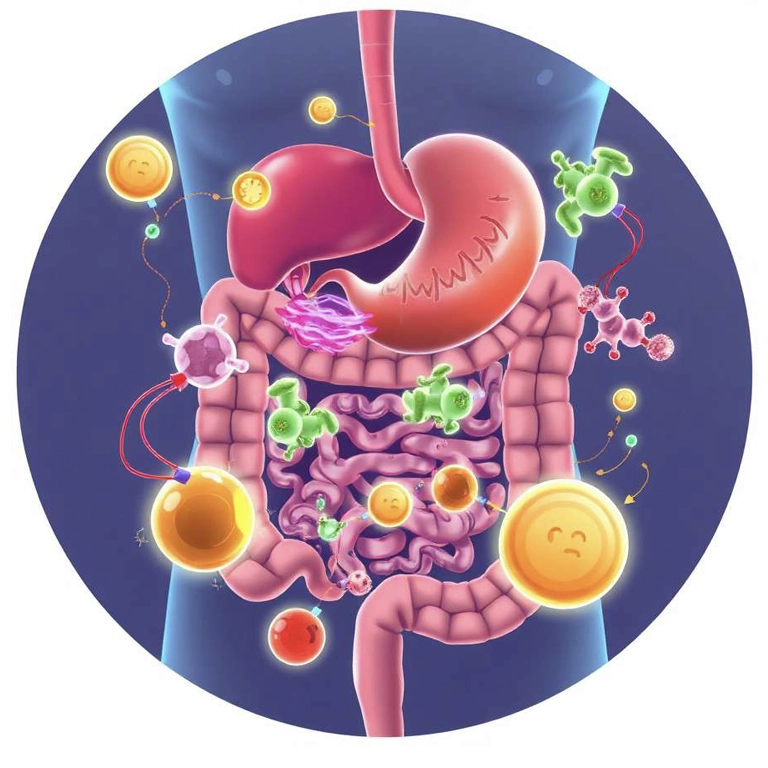
Hormone replacement therapy replaces what the ovaries are no longer reliably producing. But once oestrogen is in the body — whether made endogenously or delivered via patch, gel, or tablet — its fate is decided downstream, in the liver and the gut.
This is where the estrobolome comes in: the collection of gut bacteria and their enzymes (chiefly β-glucuronidase and various sulfatases) that determine whether conjugated, “packaged for excretion” oestrogen gets eliminated as intended, or is deconjugated and reabsorbed back into circulation via enterohepatic recirculation.
Why this matters clinically for a woman starting or already on HRT:
- Recirculation changes the effective dose. If gut bacterial β-glucuronidase activity is high, a portion of the oestrogen the liver has already conjugated for excretion gets unpacked again in the colon and reabsorbed. This means two women on an identical HRT dose can end up with meaningfully different systemic oestrogen exposure depending on their microbiome’s enzymatic activity — one of the mechanistic reasons symptom response and side-effect profiles vary so much between patients on paper-identical protocols.
- Dysbiosis and menopause status appear to interact bidirectionally. Falling oestrogen during perimenopause is associated with reduced microbial diversity, and reduced diversity is in turn associated with less efficient oestrogen regulation — a feedback loop that HRT alone doesn’t necessarily interrupt if the gut terrain isn’t addressed.
- HRT itself reshapes the gut microbiome — evidence suggests toward a more favourable pattern. Human data (albeit in premature ovarian insufficiency) shows HRT reversing microbiome and metabolome alterations seen in oestrogen-deficient states, alongside a fall in a genus (Eggerthella) linked to fibrotic and inflammatory metabolic signatures. This is reassuring, but it also means the gut is an active, moving variable throughout treatment — not a fixed backdrop.
- Long-term co-medications common in this population (PPIs, statins, antibiotics, metformin) can shift GUS and sulfatase activity independently of HRT, which is one more reason a woman’s estrobolome status shouldn’t be assumed stable over the years she may be on treatment.
None of this argues against HRT — the physiological and quality-of-life case for it is well established. It argues for not treating the gut as irrelevant to how well HRT will work for a given woman, particularly for those with a personal or family history that makes oestrogen metabolite balance (not just oestrogen quantity) clinically relevant — history of oestrogen-sensitive conditions, unexplained non-response to a previously well-tolerated protocol, or persistent bloating, constipation, or GI symptoms alongside hormonal ones.
2. What a GI-MAP adds, and which markers matter most
A GI-MAP (or comparable comprehensive stool PCR panel) doesn’t replace hormone testing — it answers a different, complementary question: is the gut terrain likely to support efficient oestrogen clearance, or to work against it?
The markers most relevant to this specific question:
| Marker | What it’s telling you |
| β-glucuronidase | The headline estrobolome marker. Elevated levels suggest greater deconjugation and reabsorption of oestrogen (and other phase II–conjugated compounds) from the gut back into circulation. Very low levels aren’t automatically “better” either — they reflect a different, and not necessarily favourable, microbial metabolic pattern, and are interpreted alongside diversity and dysbiosis markers rather than in isolation. |
| Dysbiosis index / overall bacterial diversity | Lower diversity has been associated with less efficient oestrogen regulation and higher inflammatory load — relevant context for why β-glucuronidase is running high or low in a given individual. |
| Opportunistic or pathogenic overgrowth (e.g. Proteobacteria, specific pathobionts) | Overgrowth patterns are frequently the upstream driver of elevated β-glucuronidase; addressing the overgrowth is often more productive than targeting the enzyme in isolation. |
| Pancreatic elastase / short-chain fatty acids / inflammatory markers (calprotectin, secretory IgA) | Digestive and absorptive capacity and gut inflammatory tone shape the whole detoxification pathway upstream of the estrobolome specifically — a woman with poor SCFA production or high inflammatory markers has a compromised terrain regardless of what β-glucuronidase reads on the day. |
Where useful, this is paired with a urinary oestrogen metabolite panel (2-OH, 4-OH, 16α-OH estrone and their ratios) to see the other half of the picture: not just how much oestrogen is being recirculated, but which metabolites are being formed. 2-OH is the comparatively benign pathway; 4-OH and 16α-OH metabolites carry more persistent oestrogenic and, in the case of 4-OH, potentially genotoxic activity when unchecked — so a woman with a high 16α-OH or 4-OH skew and elevated β-glucuronidase has two compounding reasons for careful, individualised protocol design rather than a standard dose-and-monitor approach.
3. Why this supports — rather than complicates — the decision
Framed for a client, the logic is simple: HRT decides what goes in; the gut and liver decide what happens to it once it’s there. Testing the estrobolome before or early into treatment gives a woman and her practitioner:
- A baseline explanation if symptom response is inconsistent with dose
- A rationale for targeted gut support (fibre, specific probiotic strains, calcium-D-glucarate, addressing overgrowth) that can improve HRT tolerability and efficacy without changing the hormone dose itself
- Reassurance, where markers are favourable, that the gut isn’t working against the treatment
- An evidence-based answer for women who are hesitant about HRT specifically because of oestrogen-metabolite concerns — the conversation shifts from “yes/no to HRT” to “how do we make sure your body clears and balances what you’re taking”
References
- Frontiers in Endocrinology. The impact of estrogen status on the gut microbiome: a systematic review and meta-analysis (2026).
- Diet, the Gut Microbiome, and Estrogen Physiology: A Review in Menopausal Health and Interventions. PMC, 2026.
- Impact of long-term medication on estrobolome-associated β-glucuronidase and sulfatase activities: Implications for estrogen homeostasis in postmenopausal women. ScienceDirect, 2026.
- The estrobolome: Estrogen-metabolizing pathways of the gut microbiome and their relation to breast cancer. International Journal of Cancer / PMC, 2026.
- Jiang L, et al. Hormone Replacement Therapy Reverses Gut Microbiome and Serum Metabolome Alterations in Premature Ovarian Insufficiency. Frontiers in Endocrinology, 2021.
- Metagenics Institute. Estrogen Metabolism Science Review — CYP450 hydroxylation pathways (2-OH, 4-OH, 16α-OH) and downstream methylation/detoxification.
Note: much of the estrobolome literature is emerging and mechanistic rather than settled clinical consensus — clinically appropriate reference ranges for β-glucuronidase in particular have not yet been formally established. Findings are presented here as rationale for individualised assessment, not as diagnostic thresholds.
If you’re weighing up HRT — or already on it and not getting the results you expected — don’t stop at the hormone panel. A GI-MAP alongside your hormone testing can show whether your gut is helping or working against your treatment, and gives us a concrete, personalised place to start.
Book a consultation with SomaOmnia to add estrobolome and gut terrain testing to your HRT plan.
GI-MAP test and DUTCH TEST/ dry urine / are available with SomaOmina.